
Non-invasive condition detection
External pressure-gauge condition detection is intended to identify abnormal indications while preserving the extinguisher’s original firefighting function.
The E in SFEMS eDevice stands for Extinguisher. Designed to fit externally on a conventional portable fire extinguisher, the device supports continuous or periodic condition monitoring without modifying the extinguisher’s pressurised components.
Discuss your site requirements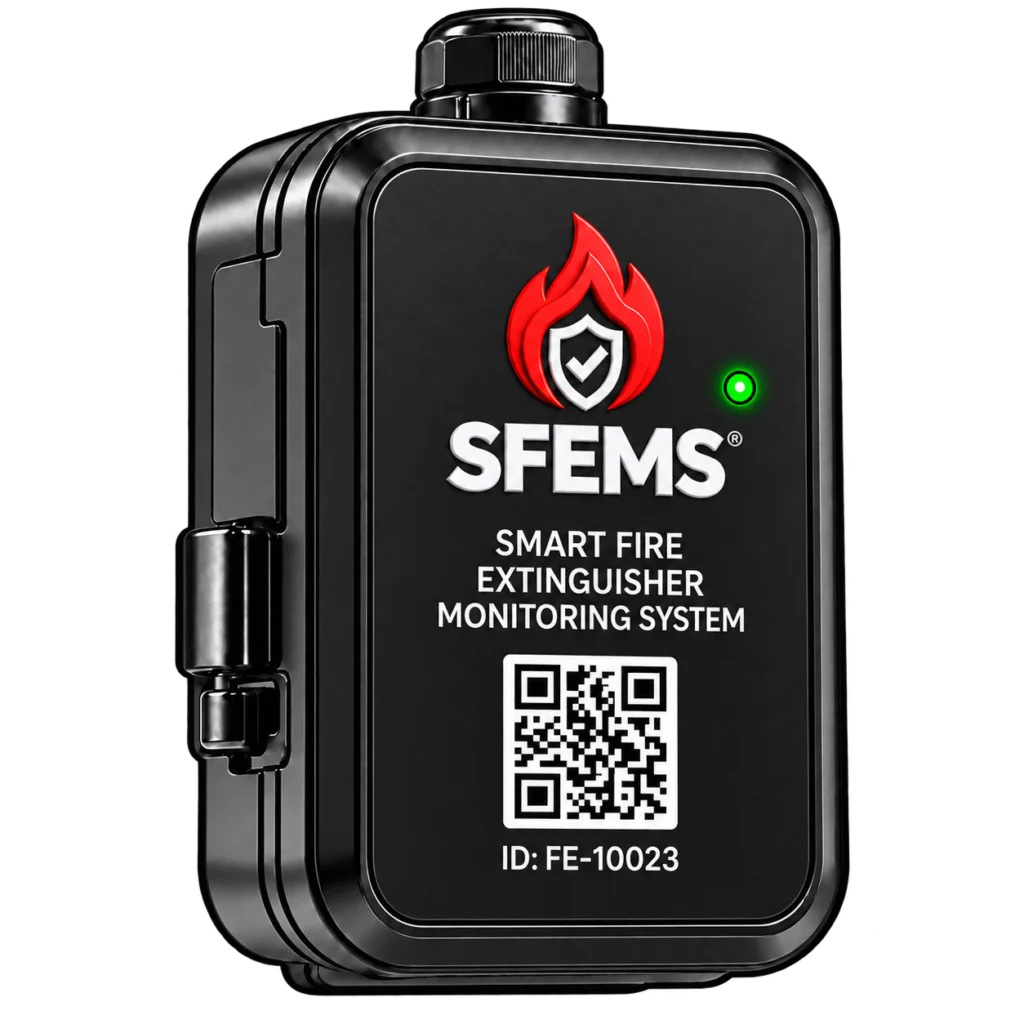
External pressure-gauge condition detection is intended to identify abnormal indications while preserving the extinguisher’s original firefighting function.
Sensor-based evaluation is designed to help identify physical displacement, tampering and operational deficiencies that need attention.
Compatible wireless communication connects field information with centralised digital monitoring for asset visibility and maintenance coordination.
The proposed SFEMS Technologies architecture combines non-invasive pressure-gauge condition detection, intelligent sensor-based event evaluation, low-power wireless communication and centralised digital monitoring. It is intended to turn conventional extinguishers into digitally monitored safety assets.
Explore the connected monitoring solutionReview extinguisher compatibility, mounting positions, monitoring intervals and wireless coverage before deployment. Installation must preserve the extinguisher’s independent operation and keep its pressure gauge, operating handle and hose accessible.
Explore industry applicationsProduct handbook specifications. Approximate values and items awaiting confirmation are identified below.
| Model | SFEMS-M01 |
|---|---|
| Approximate dimensions | 50 × 30 × 20 mm |
| Mounting | Non-invasive clamp / bracket |
| Operating temperature | −20°C to +85°C |
| Storage temperature | −40°C to +85°C |
| Ingress protection | IP65, as specified in the product handbook |
| Power source | Internal non-rechargeable Li-SOCl₂ battery |
| Operating voltage | 3.0–3.6 V DC |
| Pressure measurement range | 0–25 bar |
| Weight | Approximately 40 g — to be confirmed |
| Battery life | Up to 5 years — to be confirmed; depends on usage |
| Pressure accuracy | ±0.5 bar — to be confirmed |
The handbook describes bracket mounting near the pressure gauge without drilling or permanent extinguisher modification. Keep the gauge, operating handle and hose unobstructed, and verify that the device appears on the dashboard after installation.
Answers for this page, with links to relevant detail.
E stands for Extinguisher. SFEMS eDevice is designed to fit externally on a portable fire extinguisher and connect supported condition information to the SFEMS monitoring system.
The proposed retrofit architecture monitors the extinguisher externally without modifying its pressurised components. Compatibility and mounting must be confirmed for the extinguisher type, with its original firefighting function preserved. Discuss the arrangement through our site requirements enquiry.
The proposed device evaluates pressure-gauge indications and supported sensor events between visits. It supports follow-up rather than establishing the complete serviceability of an extinguisher. Our fire extinguisher inspection checklist explains the wider inspection context.
The supplied design describes abnormal pressure indications, displacement, tampering and operational deficiencies. Supported events depend on the final device configuration. SFEMS CLOUD is the platform for reviewing received status information and configured alerts.
Compatible units are designed for low-power wireless communication toward SFEMS LINK. A compatible SFEMS REPEATER may provide an additional path where the selected architecture and site assessment call for it.
Confirm extinguisher types, mounting positions, environmental conditions, monitoring intervals, wireless coverage and the final hardware specification. The industry applications show the types of environments to discuss with the SFEMS team.