
Skip to content
SFEMS TECHNOLOGIES Transforming Fire Safety into Real-Time Intelligence
SFEMS TECHNOLOGIES

SFEMS LINKSite-to-Cloud IoT Gateway

SFEMS LINK is the communication gateway for the SFEMS Smart Fire Extinguisher Monitoring System. Designed to connect compatible field devices with SFEMS CLOUD, it brings information from your facility into a central monitoring environment.

Discuss your site requirements
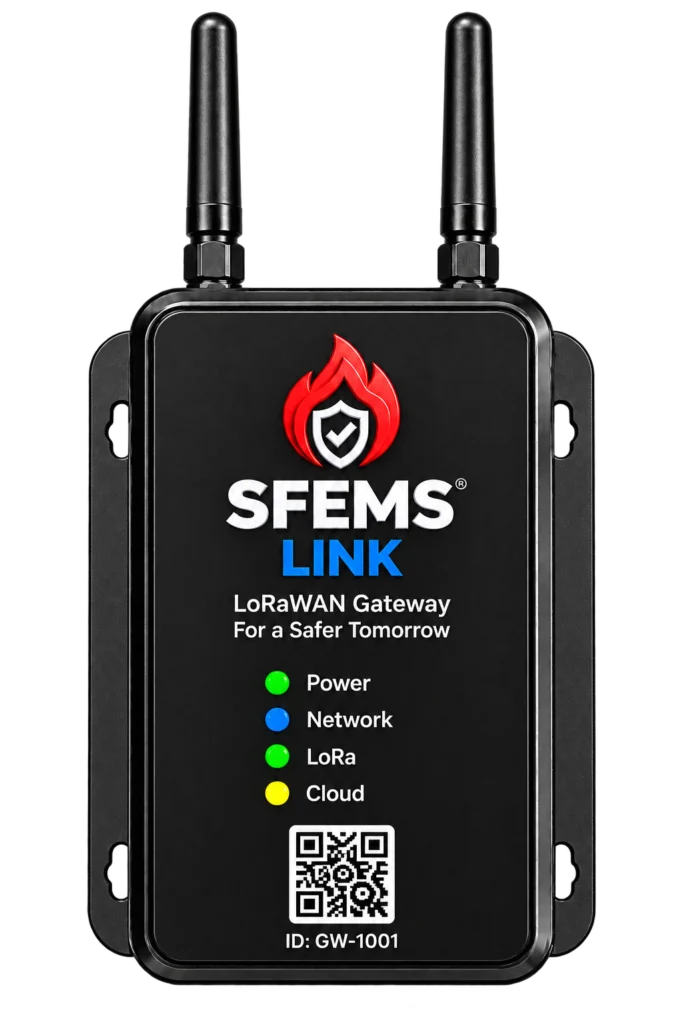
SFEMS LINK LoRaWAN gateway with dual antennas for connected fire extinguisher monitoring

What it brings to your monitoring system

Centralised device connectivity

SFEMS LINK is designed to collect information from compatible SFEMS eDevice field units and communicate it to the central monitoring platform.

LoRaWAN wireless communication

The gateway is designed to communicate with compatible low-power wireless sensors across a facility, where dedicated communication cabling at every monitoring point may be impractical.

Cloud connectivity

Provide a communication path between the on-site sensor network and SFEMS CLOUD. After platform processing, information can be made available in dashboards, reports and mobile applications.

Automated alert communication

Transmit supported device events toward the cloud. Configured rules can notify authorised personnel about abnormal pressure indications, movement, tampering or monitoring-system faults.

Flexible deployment

Plan the architecture around the facility’s layout, coverage and monitoring requirements. Additional gateways may be considered for wider coverage or improved network resilience.

Scalable monitoring infrastructure

Support additional compatible monitoring devices within the capacity of the selected network architecture as the organisation’s deployment grows.

Its role in the connected system

SFEMS LINK acts as a bridge between compatible monitoring devices and the cloud infrastructure. It receives supported wireless device information and forwards it through the site’s configured network connection so authorised users can review status, events and alerts.

Explore the connected monitoring solution

Planning your deployment

Review the layout, coverage, available network connection, power and operating needs of each facility. Additional gateways may be considered where wider coverage or improved resilience is required. Actual wireless coverage and gateway requirements depend on site conditions and network planning.

Explore industry applications

The connection between your facility and the cloud

A connected fire safety system needs a way to bring device information together and make it accessible to the people responsible for the equipment. SFEMS LINK is designed to provide that communication connection.

Whether a team manages one warehouse, a manufacturing plant, a commercial building or multiple facilities, LINK helps route supported field information toward SFEMS CLOUD. Authorised personnel can then review connected equipment without needing to be physically present at every monitoring location.

How SFEMS LINK works

  1. Monitor

    SFEMS eDevice units collect available monitoring information from the fire extinguishers on which they are fitted.

  2. Communicate

    Compatible monitoring devices transmit information wirelessly through the selected LoRaWAN network.

  3. Connect

    SFEMS LINK receives supported communications and forwards the information toward SFEMS CLOUD using the configured site network connection.

  4. Process

    SFEMS CLOUD processes incoming information, maintains monitoring records and evaluates configured alert conditions.

  5. Stay informed

    Authorised personnel can view equipment information, review events and receive notifications through the SFEMS dashboard and mobile application.

Designed for real-world facilities

No two facilities are exactly alike. Large open spaces, multiple floors, concrete structures, industrial equipment and separate buildings all influence network planning. SFEMS LINK is intended to support connected monitoring in environments such as:

  • Industrial and manufacturing facilities: connect monitoring information across production and operational areas.
  • Warehouses and logistics centres: connect compatible devices across storage and distribution spaces.
  • Commercial buildings: bring information from different floors and operational zones into one platform.
  • Hospitals and healthcare facilities: support central visibility of connected fire safety assets.
  • Hotels and hospitality properties: help teams manage monitoring information across operational areas.
  • Educational campuses: support connected monitoring across buildings and shared facilities.
  • Large residential and mixed-use developments: enable central monitoring across designated areas.

Actual wireless coverage and gateway requirements depend on site conditions and network planning.

Why choose SFEMS LINK?

Fire safety teams need timely, accessible and organised information to make informed decisions. SFEMS LINK is being developed to provide the communication connection between compatible SFEMS monitoring devices and the digital systems used to manage fire safety assets.

By connecting the wireless field network with cloud monitoring, LINK helps teams work with more organised information and clearer operational visibility. It forms part of the complete SFEMS Technologies solution from device to platform.

Build a connected fire safety network with SFEMS

Whether you are planning your first deployment or evaluating multiple facilities, SFEMS Technologies can help you assess connectivity requirements and how SFEMS LINK fits into the monitoring system.

Discuss your connectivity requirements

SFEMS LINK questions

Answers for this page, with links to relevant detail.

What does SFEMS LINK connect?

SFEMS LINK is designed to receive supported communications from compatible field devices and forward information toward SFEMS CLOUD. It is the site-to-cloud gateway within the complete monitoring solution.

Are LoRaWAN and the gateway’s internet connection the same thing?

They serve different parts of the data path. The selected LoRaWAN network carries compatible field communications. LINK then uses the configured site connection toward the cloud. See the sensors-to-cloud explanation.

Which site connection should we plan for LINK?

The earlier product handbook describes Ethernet, Wi-Fi and 4G options. Confirm the supported connection for the selected hardware and the infrastructure available at your facility through a connectivity requirements enquiry.

Does LINK generate the final user notification?

LINK provides the communication path for supported events. SFEMS CLOUD processes incoming information and evaluates configured alert conditions before information is made available to authorised teams. Explore cloud monitoring and alerts.

When would additional gateways or repeaters be considered?

Facility size, obstructions, device positions and network requirements guide the arrangement. Additional gateways may be considered for coverage or resilience, while compatible SFEMS REPEATER units may support the field path where required.

How many devices can one LINK gateway support?

Capacity depends on the selected hardware and network architecture. Agree the device count, reporting requirements and expansion needs during planning. The deployment overview provides the wider solution context without assuming a universal capacity.

Start a conversation

Fields marked * are required.

Please do not include passwords or sensitive account information.

You can also email us: info@sfemstech.com