
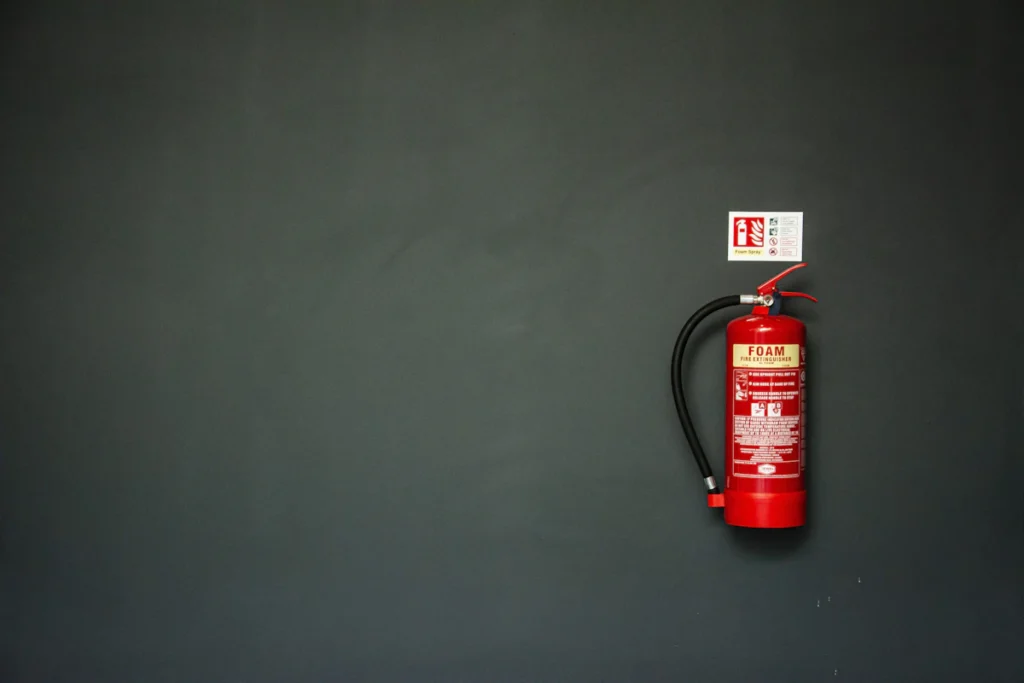
Fire extinguishers are usually checked by walking the building with a clipboard. Between those visits, an extinguisher can lose pressure, be moved, be blocked or be tampered with, and nobody knows until the next inspection. Smart fire extinguisher monitoring closes that gap by reporting the condition of each extinguisher continuously, so facility teams know what needs attention and where.
This article explains how a connected system such as SFEMS works, from the sensor on the extinguisher to the alert on your phone.
Why monitor fire extinguishers?
In large or busy facilities, extinguishers are spread across floors, warehouses, outdoor areas and remote sites. Manual rounds take time, and problems that appear between rounds stay hidden. Connected monitoring helps teams:
- see extinguishers that have lost pressure or been discharged;
- find extinguishers that have been moved from their registered location;
- spot tampering, such as a removed safety pin;
- follow conditions such as temperature in harsh environments;
- keep a record of activity to plan inspections and follow-up.
Step 1: a sensor on every extinguisher
The journey starts at the extinguisher. SFEMS MINI (E-device) is a compact, non-invasive monitoring node fitted to the extinguisher. The “E” stands for Extinguisher. It reports pressure, temperature, tamper and movement signals, and its long battery life keeps it working between service visits.
Step 2: repeaters extend the signal
Concrete walls, steel racking and long distances can weaken wireless signals. SFEMS REPEATER is a LoRaWAN site repeater that relays sensor signals through difficult areas, so outdoor zones, basements and large halls can still be covered. A coverage assessment decides how many repeaters a site needs and where they go.
Step 3: a gateway connects the site to the cloud
SFEMS LINK is the site gateway. It collects data from the site network and relays it securely to the cloud over Ethernet, Wi-Fi or 4G, depending on what the facility has available.
Step 4: one dashboard for every site
SFEMS CLOUD brings all devices and sites into one web and mobile dashboard. Teams can review device status and registered locations, follow alerts, see recorded activity and run reports. For organizations with many buildings, multi-site views make it easier to compare locations and prioritize work.
Step 5: alerts reach the right people
When a device reports a change, such as low pressure or movement, the alert appears on web and mobile so the responsible team can check the extinguisher and decide on the next step, often before the next scheduled inspection would have found the problem.
Which facilities benefit most?
Connected monitoring is most useful where extinguishers are numerous, spread out or hard to reach: commercial buildings, industrial facilities, oil and gas sites, hospitals, schools and universities, hotels, warehouses and public-sector buildings. See how SFEMS fits each sector on our Industries page.
Planning a deployment
A good deployment starts with a few questions:
- How many extinguishers need monitoring, and where are they?
- What is the building layout, and where are the obstructions?
- Which connectivity is available for the gateway: Ethernet, Wi-Fi or 4G?
- Who will receive alerts, and how should they respond?
A demonstration helps your team understand the workflow before the final installation is designed.
Monitoring supports maintenance, it does not replace it
Connected visibility supports the people responsible for fire safety. It does not replace required inspections, extinguisher servicing, local Civil Defense requirements or established emergency procedures. Instead, it helps teams spend their inspection time where it matters most.
Talk to SFEMS Technologies
SFEMS Technologies provides smart fire extinguisher monitoring for facilities in Saudi Arabia and across the GCC. Contact our team to discuss your site or request a demo.